Athletes and fitness enthusiasts often spend hours strengthening their quads, hamstrings, and calves. They focus heavily on building core stability and increasing cardiovascular endurance. Yet, the muscles of the inner thigh are frequently left out of the equation until a sudden, sharp pain forces them to pay attention. Groin strains are notoriously stubborn, incredibly painful, and can sideline you for weeks or even months.
The groin area consists of five adductor muscles that connect your pelvis to your femur. These muscles work continuously to stabilize your core and hips during almost every movement you make. Every time you sprint, change direction, kick a ball, or even walk up a steep hill, your adductor muscles absorb a tremendous amount of force. When these muscles are weak, tight, or fatigued, that force can cause microscopic tears in the muscle fibers.
Taking a proactive approach is the most effective way to keep these vital muscles functioning optimally. Groin injury prevention involves a combination of targeted strengthening, adequate mobility work, and smart training habits. By dedicating a small amount of time to caring for your inner thighs, you can avoid the frustration of a prolonged recovery and keep participating in the activities you love. This guide covers the anatomy of the region, the underlying causes of strains, and actionable strategies you can implement immediately to protect your lower body.
Understanding the Mechanics of Groin Injuries
To effectively prevent an injury, you need to understand how the body operates. The groin is a complex intersection of muscles, tendons, and ligaments. When everything works in harmony, you can move with power and agility. When one component fails, the entire system becomes compromised.
What Muscles Are Involved?
The adductor muscle group includes the adductor longus, adductor brevis, adductor magnus, pectineus, and gracilis. These five muscles run from the pubic bone down the inside of the thigh, attaching at various points along the femur and knee. Their primary job is to pull the legs together, a movement known as adduction. They also play a major role in stabilizing the pelvis during activities where you are standing on one leg, such as running or walking.
The adductor longus is the most commonly injured muscle in this group. It absorbs massive amounts of tension during rapid directional changes. Because the tendons connecting these muscles to the bone have a relatively poor blood supply, they take significantly longer to heal once damaged, making prevention a much better strategy than rehabilitation.
Common Causes of Groin Strains
Most groin injuries occur during sports that require sudden acceleration, pivoting, or kicking. Soccer, hockey, football, and martial arts carry a particularly high risk. However, you do not need to be a professional athlete to experience a strain.
Fatigue is a massive contributor to muscle tears. When the adductors are exhausted, they lose their ability to absorb shock effectively. A sudden movement that a fresh muscle could easily handle will often cause a fatigued muscle to tear.
Muscle imbalances also play a significant role. Many people have incredibly strong quadriceps and hamstrings but severely underdeveloped adductors. When you perform an explosive movement, the stronger muscles generate more force than the weaker adductor muscles can handle, leading to a rupture. Poor flexibility and an inadequate warm-up further compound these risks, leaving cold, tight muscles vulnerable to tearing under pressure.
The Core Principles of Groin Injury Prevention
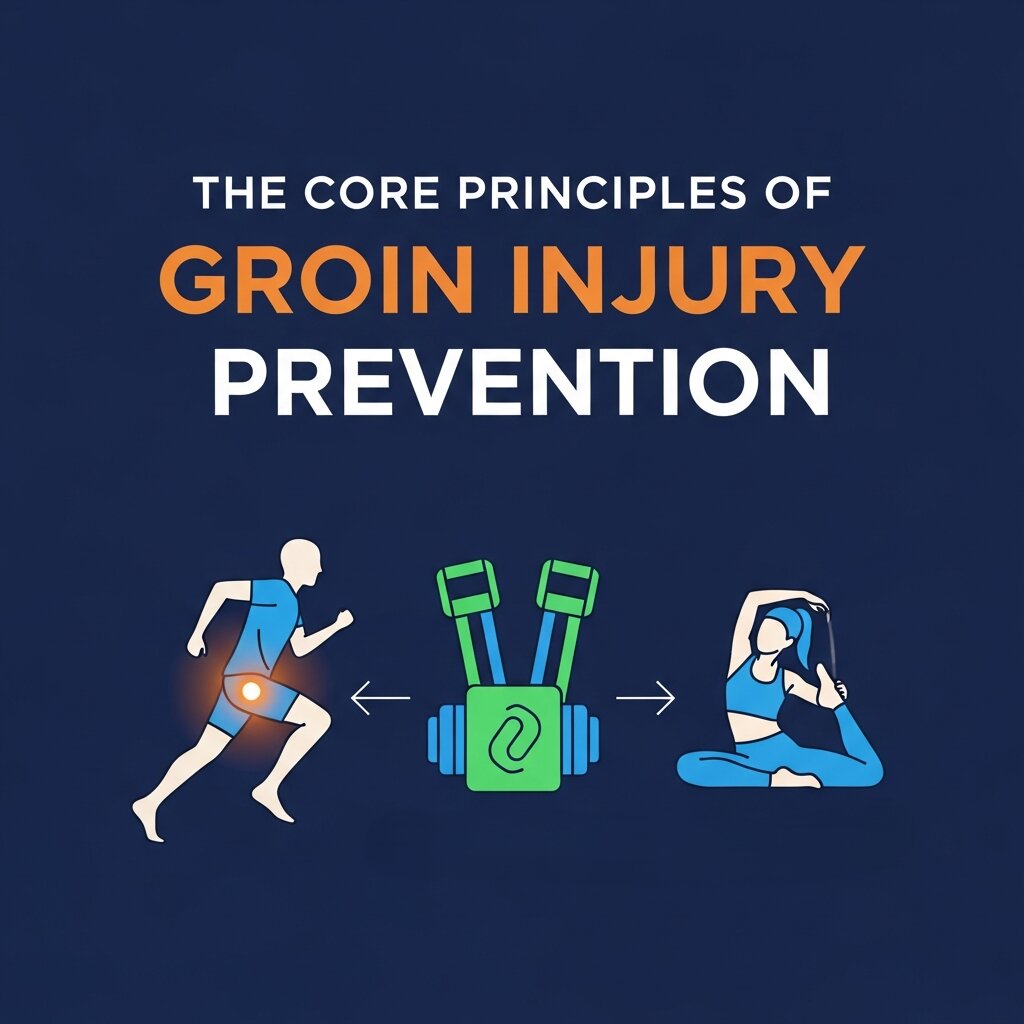 Protecting your inner thighs requires a multifaceted approach. You cannot rely on a single stretch or exercise to keep you safe. Instead, you need to build a routine that addresses muscle balance, tissue temperature, and joint mobility.
Proper Warm-Up Routines
A cold muscle is a stiff muscle. Stiff muscles do not stretch well, and when forced to stretch under a heavy load, they snap. A thorough warm-up increases blood flow to the area, raises the temperature of the muscle tissue, and prepares the nervous system for the demands of your workout.
Static stretching, where you hold a stretch for thirty seconds or more, is generally not recommended before a workout. It can actually decrease muscle power and responsiveness. Instead, focus on a dynamic warm-up. Dynamic stretching involves moving the muscles through their full range of motion.
Start with five to ten minutes of light cardiovascular activity, such as jogging, jumping jacks, or cycling. Once you have broken a mild sweat, move into dynamic movements targeted at the hips and groin. Leg swings (both forward and side-to-side), high knees, and hip circles are excellent choices. This active preparation is a non-negotiable step in effective groin injury prevention.
Strength and Conditioning
Strength is your greatest armor against injury. Strong muscles can absorb more force and handle heavier loads without tearing. Unfortunately, traditional gym routines often neglect the adductors, focusing entirely on forward-and-backward movements like squats and deadlifts.
To prevent groin injuries, you must move in multiple planes of motion. You need to incorporate exercises that challenge the inner thigh muscles directly. Building strength in the surrounding areas, including the glutes, abdominals, and lower back, is equally critical. A stable core and strong glutes reduce the workload on the adductors, preventing them from having to compensate for weaknesses elsewhere.
Flexibility and Mobility
While extreme flexibility is not necessary for most people, having a healthy range of motion in your hips is vital. If your hips are tight, your body will naturally alter its mechanics to compensate, placing undue stress on the groin.
Mobility refers to your ability to actively control your body through a range of motion. It requires both flexibility and strength. Incorporating exercises that open up the hips and stretch the inner thighs will help maintain optimal joint mechanics. Save static stretching for after your workout, when the muscles are already warm and pliable. This is the best time to safely lengthen the muscle fibers and improve your overall flexibility.
Top Exercises for Groin Injury Prevention
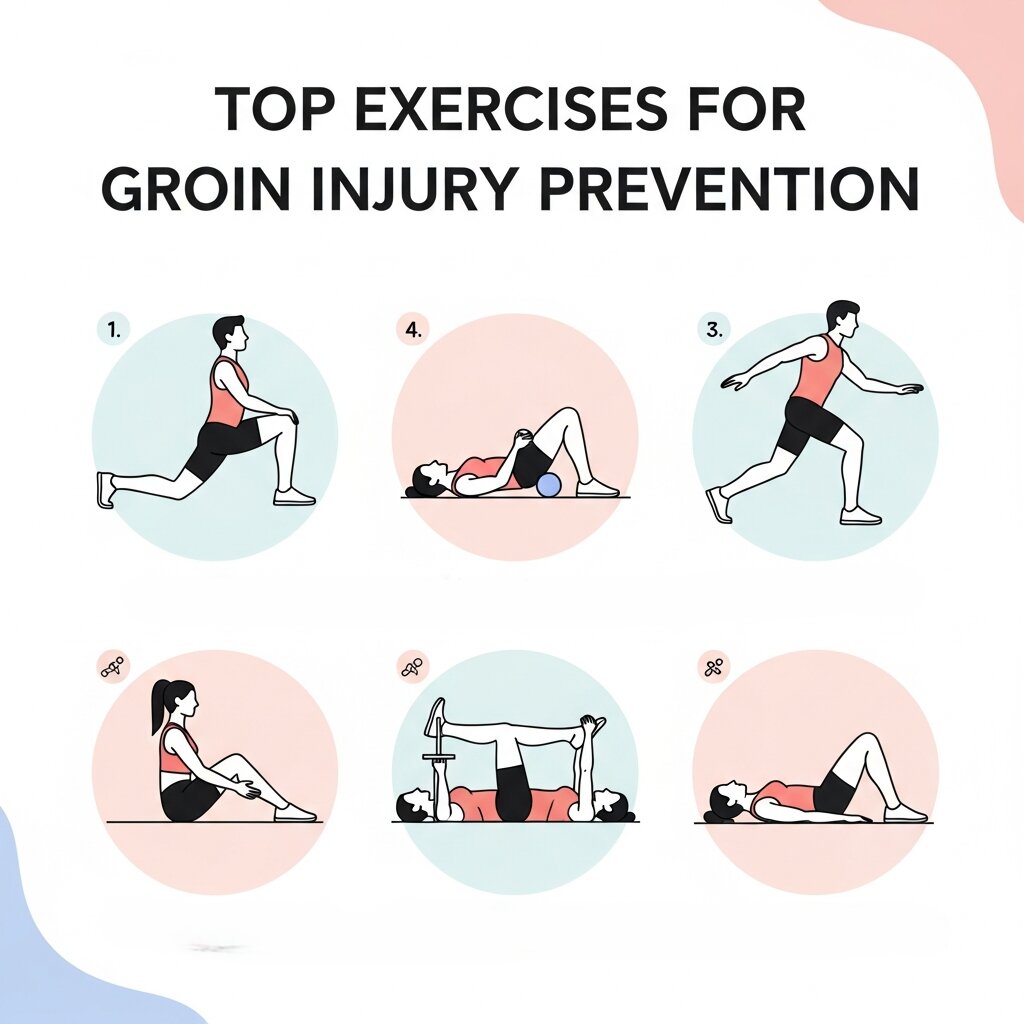 Adding a few specific exercises to your weekly routine can dramatically reduce your risk of suffering a groin strain. These movements focus on building resilience in the adductor muscles and improving hip stability.
The Copenhagen Adductor Exercise
The Copenhagen adductor exercise has gained massive popularity in recent years for its proven ability to reduce groin injuries, particularly in soccer players. It is a challenging movement, but it yields incredible results.
To perform this exercise, you need a bench or a partner. Lie on your side with your top foot resting on the bench and your bottom leg underneath the bench. Prop yourself up on your forearm, creating a side plank position. Your body should form a straight line from your shoulders to your ankles. Now, slowly lift your bottom leg up to touch the bottom of the bench, and then lower it back down.
If this is too difficult, you can modify the movement by placing your knee on the bench instead of your foot. Aim for three sets of eight to twelve repetitions on each side.
Lateral Lunges
Lateral lunges build strength in the adductors while also improving hip mobility and glute activation. Because this movement happens in the frontal plane (side-to-side), it trains the muscles exactly how they are used during sports and daily activities.
Start by standing with your feet together. Step out widely to your right side. Keeping your left leg completely straight, push your hips back and bend your right knee, lowering your body as far as comfortable. Keep your chest up and your back flat. Push off your right foot to return to the starting position. Perform three sets of ten repetitions on each leg. You can hold a dumbbell or kettlebell at your chest to increase the difficulty as you get stronger.
Glute Bridges with Adductor Squeeze
This exercise targets the glutes while simultaneously engaging the adductor muscles. It forces the inner thighs to work alongside the hips, reinforcing proper movement patterns.
Lie on your back with your knees bent and your feet flat on the floor, roughly hip-width apart. Place a yoga block, a small medicine ball, or a rolled-up towel between your knees. Squeeze the block firmly with your inner thighs. While maintaining this squeeze, push through your heels and lift your hips off the floor until your body forms a straight line from your knees to your shoulders. Squeeze your glutes at the top, then slowly lower your hips back down. Perform three sets of fifteen repetitions.
Lifestyle and Recovery Factors
 Training is only one piece of the puzzle. The way you treat your body outside of the gym dictates how well you recover and adapt to the stress you place upon it.
Nutrition and Hydration
Muscles require adequate nutrients to repair themselves and grow stronger. A diet rich in high-quality protein provides the building blocks for muscle tissue repair. Complex carbohydrates supply the energy needed for intense workouts, preventing premature fatigue.
Hydration is easily overlooked but critically important for injury prevention. Water makes up a large percentage of muscle tissue and helps lubricate the joints. Dehydrated muscles are less elastic and more prone to cramping and tearing. Drink water consistently throughout the day, and increase your intake before, during, and after strenuous activity.
Rest and Sleep
When you sleep, your body goes into repair mode, releasing hormones that facilitate muscle recovery. Consistently getting less than seven to eight hours of quality sleep impairs this process, leaving your muscles vulnerable to injury.
Listen to your body. If you feel tightness or a mild ache in your groin, do not push through the pain. Taking a few days of active rest to allow the muscle to recover is far better than tearing it and being sidelined for months. Incorporate rest days into your training schedule and consider activities like walking, swimming, or yoga to promote blood flow without overtaxing your adductors.
Frequently Asked Questions About Groin Pain
1. What is the fastest way to prevent a groin injury?
The fastest way to prevent a groin injury is to combine a proper dynamic warm-up, regular adductor strengthening exercises, and maintaining good flexibility. Consistency in these habits is key to reducing risk.
2. Which exercises are best for groin injury prevention?
Some of the most effective exercises include Copenhagen adductor holds, lateral lunges, sumo squats, and glute bridges with an adductor squeeze. These target both strength and stability in the inner thigh muscles.
3. Can beginners experience groin injuries?
Yes, beginners are actually at higher risk because their muscles may be weaker and less conditioned. Sudden increases in activity or poor warm-up routines can easily lead to strains.
4. How do I know if my groin is tight or injured?
Tightness usually feels like mild discomfort or stiffness, especially during stretching. An injury, on the other hand, often involves sharp pain, swelling, bruising, or difficulty moving the leg.
5. Is stretching enough for groin injury prevention?
No, stretching alone is not enough. You also need strength training and proper warm-ups. A balanced routine that includes mobility, strength, and recovery is essential.
6. How often should I train my adductor muscles?
You can train your adductors 2–3 times per week as part of your lower-body or full-body workouts. Make sure to allow enough recovery time between sessions.
7. Are groin injuries more common in certain sports?
Yes, sports that involve sudden direction changes, sprinting, or kicking—such as football, soccer, hockey, and martial arts—have a higher risk of groin injuries.
8. Should I stop exercising if I feel groin discomfort?
If the discomfort is mild, you can switch to low-impact or mobility exercises. However, if you feel sharp or worsening pain, it’s best to stop and rest to avoid further injury.
9. Does hydration affect groin injury risk?
Yes, dehydration can make muscles less flexible and more prone to cramps and tears. Staying well-hydrated helps maintain muscle function and reduces injury risk.
10. When should I see a doctor for groin pain?
You should seek medical advice if the pain is severe, persists for more than a few days, or is accompanied by swelling, bruising, or difficulty walking.
Keep Moving Forward Safely
Building a resilient body takes time, patience, and consistency. Groin injury prevention is not about a quick fix; it requires a fundamental shift in how you warm up, train, and recover. By acknowledging the importance of your adductor muscles and dedicating specific time to strengthening and stretching them, you drastically reduce your risk of suffering a painful setback.
Start by incorporating dynamic warm-ups before every session. Slowly introduce lateral lunges, Copenhagen planks, and targeted core work into your weekly routine. Respect your body’s need for hydration, nutrition, and sleep. Taking these proactive steps today will ensure you remain pain-free, active, and capable of tackling whatever physical challenges come your way.